
Ericsson CEO Andres Vicente emphasised the critical need for technology alignment and ecosystem collaboration to ensure security in the age of Artificial Intelligence. Speaking on Wednesday, he highlighted that AI's benefits in productivity and innovation cannot be forgone, making shared security concerns across interconnected tech layers paramount. Ericsson is actively working with partners through the Trusted Tech Alliance to establish common AI-era security understandings.

A new study by Goa Institute of Management and IIM Kozhikode reveals that discontinuing technology is a complex process, not a single decision. It's shaped by habits, relationships, routines, and dependencies users build around it. The research identifies four key elementsPeople, Technology, Task, and Structurewhose alignment dictates continued use or pressure to discontinue. It highlights that emotional attachment, switching costs, and hidden dependencies often make it difficult for individuals and organisations to abandon even unsatisfactory systems.

Technology giant Google has announced a USD 5 million funding initiative for IIT Kharagpur to accelerate advanced AI research and cultivate scientific talent in India. The funding will support research in areas like Indic languages, agriculture, and educational technology, alongside expanding AI training and curriculum development for students and faculty. Google CEO Sundar Pichai highlighted the importance of this partnership in advancing India's innovation landscape.

Goa Chief Minister Pramod Sawant stated that while Artificial Intelligence (AI) can make filmmaking more accessible, it cannot replace human imagination, emotions, and creative judgement. Speaking at the IFFI, he emphasised that filmmakers remain storytellers, with technology providing new tools. Sawant also highlighted the need for greater representation of women in key filmmaking roles and noted AI's potential to foster new creators in India.

Paytm's Singapore arm, Paytm Singapore Pte Ltd, will invest up to Rs 200 crore in subsidiaries of Singapore-based Funding Societies, including a 19.1 per cent stake in CardUp. This strategic move aims to expand Paytm's technology-led payments and financial services in Singapore through a "partner operated" model.

'This will be India's first in-orbit docking and refuelling demonstration. We will have our commercial mission by the end of 2027.'

IIT Madras researchers have developed 'SEANAV', a real-time digital twin platform for autonomous maritime navigation. This platform allows for the testing, validation, and training of autonomous systems in a realistic virtual environment, addressing the challenges of real-world testing. SEANAV aligns with India's Sagarmala Programme and Maritime India Vision 2030, aiming to enhance safety and efficiency at Indian ports and reduce environmental risks.

Karnataka Chief Minister D K Shivakumar urged the Centre to expedite statutory clearances for the Mekedatu balancing reservoir project and withdraw recommendations of the Kasturirangan report on the Western Ghats. He also requested aligning CSR initiatives with state guidelines to upgrade 1,000 government schools. These demands were made during the inauguration of CoSMOS in Mysuru, attended by Prime Minister Narendra Modi, where Shivakumar also highlighted Karnataka's contributions to space technology and the importance of decentralising scientific infrastructure.

State Bank of India (SBI) Chairman C S Setty has warned that artificial intelligence-related errors could cascade across interconnected financial systems, creating significant governance risks for institutions. He emphasised the critical need for clearly defined permissions, transaction limits, audit trails, and human intervention mechanisms as banks increasingly deploy autonomous AI systems.
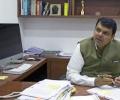
Maharashtra Chief Minister Devendra Fadnavis announced the state's ambition to become India's leader in quantum technology. The state plans to build a robust ecosystem, align with the National Quantum Mission, and train over 5,000 professionals, recognising AI, semiconductors, and quantum tech as key pillars for future growth and global competitiveness.

India's markets regulator, Sebi, is set to issue comprehensive guidelines for the responsible use of Artificial Intelligence (AI) in capital markets, aiming to balance technological innovation with robust investor protection. The guidelines will focus on disclosures, accountability, and human oversight in critical AI-driven decisions.
Saregama India's MD, Vikram Mehra, outlined the company's strategy regarding artificial intelligence, viewing it as a long-term opportunity for cost reduction and faster market entry. While supporting licensed innovation, Saregama is committed to combating the unlicensed use of its music catalogue, particularly against AI-generated covers. The company is investing in technology to track and manage such uses and is also exploring collaborations with AI creators. Saregama is also leveraging AI internally for content creation and operational efficiency, aligning with broader industry trends.

Billionaire Elon Musk reacted to the Democratic sweep in the 2026 US midterm elections with sarcastic posts on X, lamenting that his 'election-interfering space lasers didn't work' and suggesting 'data centers in space' looked appealing after Republicans suffered major setbacks despite his extensive financial support.
IIT Hyderabad and Japan's Mie University have signed MoUs to foster academic exchanges and joint research, with a strong focus on semiconductors and digital technologies. This collaboration aims to develop skilled talent and strengthen the semiconductor ecosystem in both countries.

IT services giant Cognizant has established its 'OpenAI Frontier Capability Group', comprising over 25,000 professionals. This new group aims to deliver OpenAI products like Codex and ChatGPT to clients, helping enterprises integrate advanced AI models into their core operations. Cognizant is also scaling OpenAI internally across its sales and customer success functions.

Sikkim's Education Minister Raju Basnet highlighted the potential of computational mathematics and artificial intelligence in predicting landslides and weather risks at an international conference. Experts discussed the role of mathematics in AI, scientific discovery, and the need for interdisciplinary research and international cooperation to develop reliable AI systems for real-world challenges.

The Bajaj Group is building a healthcare business that aims to make money by keeping patients healthy rather than depending on hospital admissions.

India's central cyber security agency, I4C, has issued a critical warning to banks, NBFCs, and fintech firms regarding a surge in financially motivated cyberattacks leveraging artificial intelligence agents. These AI-driven attacks enable hackers to compromise systems and execute fraudulent transactions at machine speed, making investigations complex due to record deletion. The advisory, issued in collaboration with CERT-In, urges financial institutions to implement robust security measures, align with CERT-In's blueprint, and report incidents promptly to mitigate the escalating threat.

Air Chief Marshal AP Singh stated on Sunday that the Indian Air Force's Operation Sindoor demonstrated its capability to strike targets across the Western front, serving as a warning to adversaries. He highlighted the operation's validation of the IAF's capability-centric approach, indigenous weapon systems, and commitment to zero collateral damage, while also outlining the force's long-term vision for 2047 to become a multi-domain aerospace power.
Kerala Chief Minister V D Satheesan announced the state's vision to become a national hub for artificial intelligence and emerging technologies, coinciding with the launch of Naviq Technology by IBS Software Group. The state government is implementing initiatives like an AI-powered dashboard, a Global Job Watch Tower, and curriculum revisions to align with technological advancements and foster skill development in AI and semiconductor sectors.

Experts cautioned that this headcount increase does not necessarily indicate a return of steady demand, which has evaded them over the last few years.

The Road Transport Ministry has updated the Central Motor Vehicles Rules 1989 to allow flex-fuel vehicles capable of running on up to E100 (nearly pure ethanol). These amendments include E100 alongside E85 for emission certification and raise the vehicle weight limit for light petrol and diesel vehicles. This move supports India's strategy to reduce crude oil import dependence, with major automakers already developing flex-fuel models for the Indian market.

India's private equity (PE) industry is transitioning from a 'spray and pray' approach to a more selective investment model, focusing on established businesses, greater strategic influence, and operational transformation to generate definitive returns, according to industry leaders Renuka Ramnath and Amit Chandra.
NIT Rourkela has announced the launch of four new academic programmes for the 2026-27 session, focusing on emerging technologies such as semiconductors, artificial intelligence, and quantum technologies.

India's manufacturing and services sectors are set to create over 35 crore new jobs by 2030, necessitating urgent skilling and industry-academia collaboration. Key sectors like automotive, logistics, telecom, clean energy, and textiles will drive this growth, highlighting the need for competency-driven learning to prepare the workforce.

Uttar Pradesh Chief Minister Yogi Adityanath announced the state's ambitious shift from mobile phone assembly to advanced microchip manufacturing, data centres, and artificial intelligence. He highlighted significant investments and growth in the digital economy, attributing the transformation to the "double-engine government's" alignment with national initiatives like 'Make in India' and 'Aatmanirbhar Bharat'. Adityanath also criticised previous administrations for hindering the state's potential.

'They allow people to enter and exit. And there is transparency. There is market infrastructure. There is technology. There is cyber security. And then there are enough enablers.'

India is developing a 'Gross Domestic Knowledge Product' (GDKP) to identify and define its knowledge assets, a move aimed at safeguarding them amidst global efforts to monetise and 'weaponise' knowledge, according to NITI Aayog member R Balasubramaniam.

Should the Tata Sons board heed the views of its majority shareholder? asks Laveesh Bhandari.

Airtel Business CEO Sharat Sinha stated that evolving architecture and methodologies for safely deploying Artificial Intelligence, coupled with adequate guardrails, are essential to unlock productivity gains. He welcomed the government's upcoming consultation paper on AI regulation, focusing on safety, deepfakes, and a human-first approach. Sinha also highlighted AI's role in driving demand for digital infrastructure and Airtel's growth in cybersecurity and fraud prevention.

Activists Prashant Bhushan, Anjali Bharadwaj, Yogendra Yadav, and Neha Bora have raised serious questions about the Election Commission's decision-making process for the nationwide Special Intensive Revision (SIR) of electoral rolls. They allege contradictions in the EC's statements, lack of transparency regarding decisions, concerns over centralisation of the electoral database, and unauthorised changes to Form 6, calling for greater accountability and disclosure of records.
Mizoram's school education minister inaugurated the northeast region's first 'New Age Tech Skills Centre' at the Government Comprehensive Model School in Aizawl. The centre, established under Bharat Forge Limited's CSR initiative, will offer training in AI, robotics, IoT, 3D printing, CAD, CNC simulation, and drone technology.

India's GST Council has approved changes allowing small online sellers to register in states without physical premises by using an e-commerce operator's warehouse as their principal place of business, aiming to boost national sales for small businesses.

'The most effective investment approach is one that aligns with an investor's temperament, risk tolerance, and decision-making style.'

Jacob Coxon, an AI researcher, resigned from Anthropic, accusing leading tech firms like OpenAI and Anthropic of irresponsibly racing towards superintelligence without adequate safeguards. He warned of existential dangers, a sentiment echoed by Anthropic's Evan Hubinger, who admitted the company lacks a plan for superintelligence alignment.
The Indian Air Force (IAF) demonstrated 'Vayu UTtaM', an indigenously developed multi-mode Unmanned Traffic Management (UTM) system, at 'Dronathon 2026' in Pokhran. This ground-based system is designed to manage drone operations in congested airspace and identify rogue drones, with applications extending to critical infrastructure, civil aviation, and public safety. The event also saw the release of the 'IAF UAS Roadmap' to guide indigenous innovation in unmanned systems.

The Goods and Services Tax (GST) Council is set to discuss proposals aimed at transforming the complex indirect tax system into a more business-friendly regime, focusing on simplifying compliance, reducing administrative burdens, and potentially raising the prosecution threshold.

The Trinamool Congress has lost the chairpersonship of two significant Parliamentary panels following a reconstitution by Rajya Sabha Chairman C P Radhakrishnan and Lok Sabha Speaker Om Birla. This development comes after a split in the TMC, with rebel MPs joining the Nationalist Citizen Party and supporting the NDA. The TMC has strongly criticised the move, alleging that Parliament is being turned into a 'deep, dark chamber' due to their exclusion from committee leadership.
Andhra Pradesh Chief Minister N Chandrababu Naidu has approved the establishment of India's first dedicated Quantum and AI University campus in Amaravati by NIELIT. This significant project, funded by the MeitY, Government of India, will focus on advanced technologies like Quantum, AI, and Semiconductors, integrating education, research, and entrepreneurship.

IndiGo and Air India Group will progressively shift flights from Mumbai's Chhatrapati Shivaji Maharaj International Airport (CSMIA) to the newly built Navi Mumbai International Airport (NMIA) starting from December. This phased transition, expected to complete by the 2027 summer aviation season, aims to ease capacity constraints at CSMIA, facilitate its Terminal 1 redevelopment, and establish a dual-airport system for Mumbai, enhancing connectivity and future growth.
